

Why OEMs Ask for Higher Pack Density
What Higher Pack Density Really Means for Automotive Supply Chains
What is “Pack Density”?
Pack density refers to how many parts you can fit into a box, pallet, or transport unit — essentially, how tightly and efficiently those parts are packed. A higher pack density means more parts per shipment, fewer trucks or pallets needed per volume, and lower cost per part moved.
Why OEMs Prioritize Higher Pack Density
• Cut Freight Costs
When you pack parts more efficiently, you can ship more per pallet or container. That means fewer truckloads to transport the same volume. Over time, especially with large volumes, those savings add up.
• Reduce Handling & Storage Costs
Fewer boxes and pallets means less handling, less warehouse space, and fewer forklift or labor moves. For high‑volume or high‑SKU operations, those savings in labor and space can be significant.
• Maximize Warehouse Space
Space comes at a premium and dense packing lets OEMs store more parts within the same footprint. More parts per pallet, fewer pallets, more efficient use of storage, less clutter, and better material flow.
• Improve Sustainability & Reduce Emissions
Fewer shipments = fewer miles driven. Less packaging waste. Reduced carbon footprint per part. For OEMs under pressure to meet sustainability goals, density helps on both cost and environmental fronts.
• Protect Parts Effectively While Saving Space
With well‑designed dividers, inserts or nested packaging, dense packing doesn’t have to come at the cost of part protection. Proper packaging can keep parts secure, avoiding damage, even when more are packed per container.
What to Consider When Requesting Higher Pack Density
Not all parts or supply chains are the same. When evaluating higher pack density for automotive parts, consider:
Part Characteristics: weight, fragility, size/shape, material. Some parts can’t be densely packed without risk of damage.
Shipment Frequency & Shipping Distance: For frequent or local shipments, density helps. For long‑haul or mixed shipments, packing and unpacking time matters.
Handling, Storage, and Logistics Requirements: Tight packing may require more careful handling or more robust packaging, boxes, dividers, cushioning.
Long-Term Cost vs. Upfront Investment: Densely packed containers may require custom packaging solutions (dividers, nested cells, etc.), which can cost more upfront but pay off over time.
Sustainability Goals and Waste Reduction: More dense packing reduces packaging waste, freight emissions, and overall footprint, all important for manufacturers prioritizing sustainability.
Consult with a packaging specialist for the best solution!

How Smart Packaging Design Makes Density Work
With the right packaging design, like cell‑dividers and nested inserts you can get high density without compromising part protection. Packaging that secures each part individually, prevents shifting, and keeps parts separated can enable dense packing while avoiding damage.
For example, packaging that allows two parts to nest in one cell, or uses fitted dividers, can drastically increase density while maintaining protection and ease of handling.
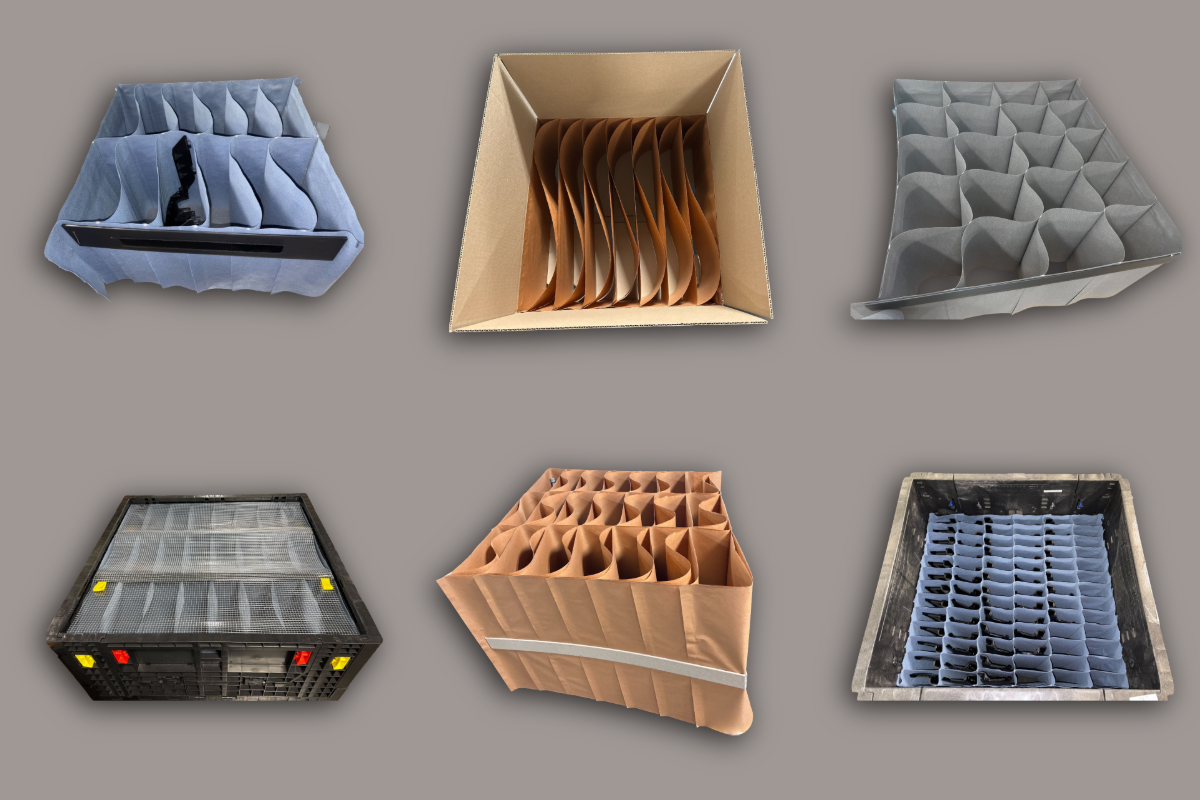
Examples of ITB Packaging’s solutions for automotive components packaging
Why It Matters Today
For OEMs and suppliers navigating tight margins, high shipping costs, crowded warehouses, and increasing sustainability expectations, pack density isn’t just “nice to have.” It’s a critical lever for:
reducing cost per part delivered
improving supply‑chain efficiency
lowering environmental impact
protecting parts during transit
optimizing storage and handling
Investing in packaging solutions that deliver high pack density can deliver measurable value over time.
Key Takeaways
Higher pack density = more parts per shipment → fewer trucks, pallets, and freight costs.
Dense packing reduces warehouse space needs, handling labor, and storage costs.
With good packaging design, you get efficient packing without sacrificing protection.
For high-volume automotive supply chains, pack density is a strategic advantage — cost‑effective, efficient, and sustainable.
The right packaging approach depends on part characteristics, shipping patterns, and long‑term goals.