

Returnable Transport Packaging
For Automotive Manufacturing

Overview
Returnable transport packaging has been a cornerstone of automotive manufacturing for decades, continually evolving to meet the industry’s changing needs.
As OEMs and suppliers face mounting pressure to reduce costs, improve efficiency, and enhance sustainability, these durable, reusable containers remain a critical asset in optimizing automotive supply chains. From protecting sensitive electronics to safely transporting large body panels, returnable packaging solutions are adapting to new challenges, including the shift towards electric vehicle production and increasingly complex global logistics. This article explores the current applications, benefits, and challenges of returnable transport packaging, offering insights for automotive professionals seeking to refine their packaging strategies and improve their operational performance.
Get a Returnable Packaging System Readiness Checklist to assess your organization’s readiness.
Definition of Returnable Packaging
Returnable packaging for the automotive industry consists of durable, reusable containers designed to protect automotive parts during multiple supply chain trips. Returnable packaging offers economic and environmental advantages over single-use alternatives.
Several key features characterize returnable packaging:
- Reusability: Designed for multiple use cycles, often lasting several years
- Durability: Constructed to withstand repeated handling, stacking, and transportation
- Standardization: Often engineered to industry-specific dimensions for efficient stacking and transport
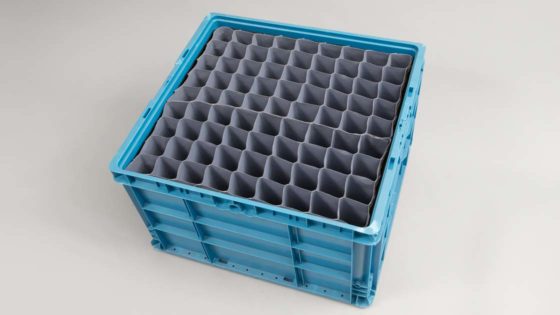
- Customization: Can include specialized inserts, dividers, or dunnage to protect specific parts
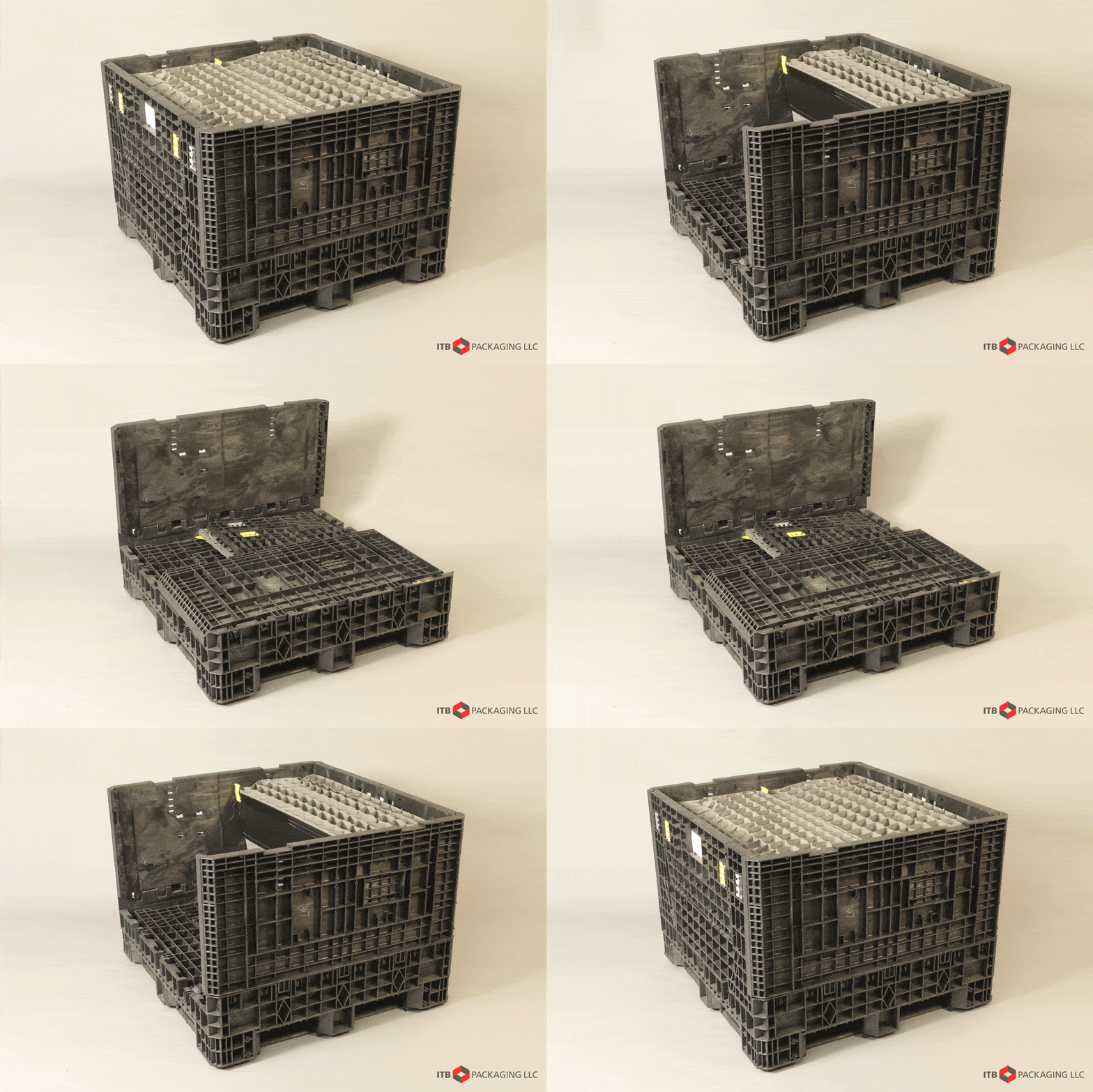
ITB Packaging offers single-SKU, collapsible designs that combine dunnage and dividers, optimizing space and reducing handling time.
Common Types of Returnable Packaging for Automotive Manufacturers include:
- Plastic containers: Stackable bins and totes in various sizes for small to medium parts, such as Euro containers, KLT containers, and Automotive Logistics Containers (ALC)
- Collapsible containers: Space-saving options that reduce return transport costs when empty
- Custom dunnage: Tailored inserts or dividers to protect specific parts within containers
- Pallets and pallet containers: For larger components or bulk shipments
- Specialized racks: Designed for oddly shaped or fragile parts like body panels or windshields
- Reusable bags: Fabric or reinforced plastic bags for smaller, non-fragile components
These returnable packaging solutions are continually refined to optimize space utilization, enhance part protection, and support efficient handling throughout the automotive supply chain. As we explore the applications of these packaging types in the next section, we’ll see how they address specific challenges in automotive production.
Explore our range of returnable packaging solutions designed specifically for automotive applications.

LX High Density Cells
Enlarge

Blue Plush in Tote Close Up
Enlarge
Blue Plush in Tote
Enlarge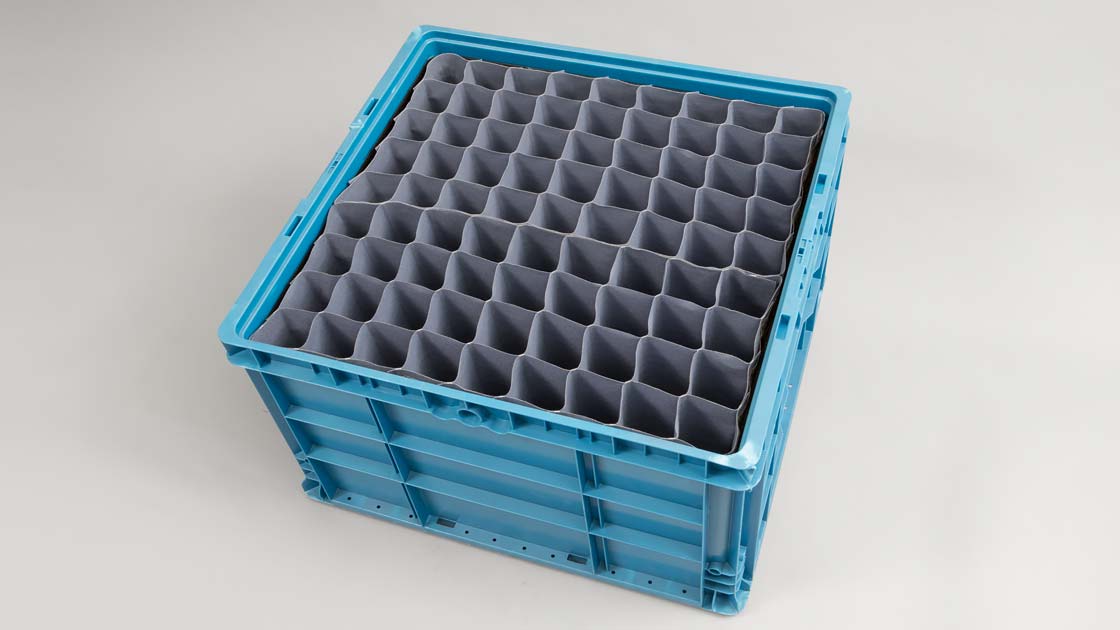

LX Fabric nesting
Enlarge

Blue Plush Varied Cells
Enlarge

Bulk Bin Interleaf Cells
Enlarge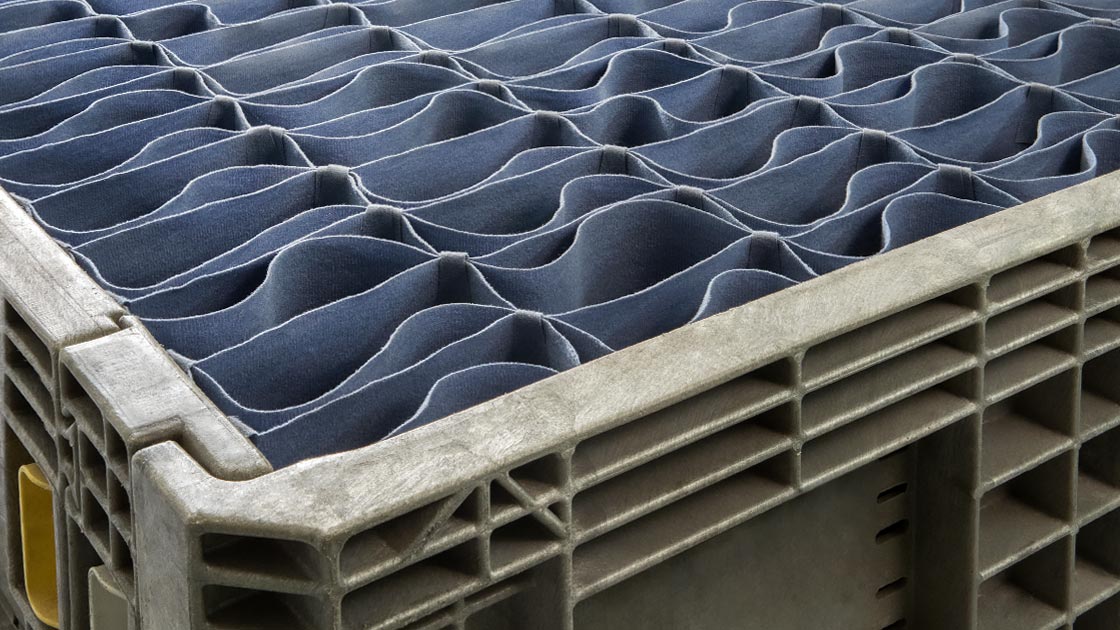

Blue Plush Nesting
Enlarge

LX Fabric
Enlarge

LX Tote With Dust Cover
Enlarge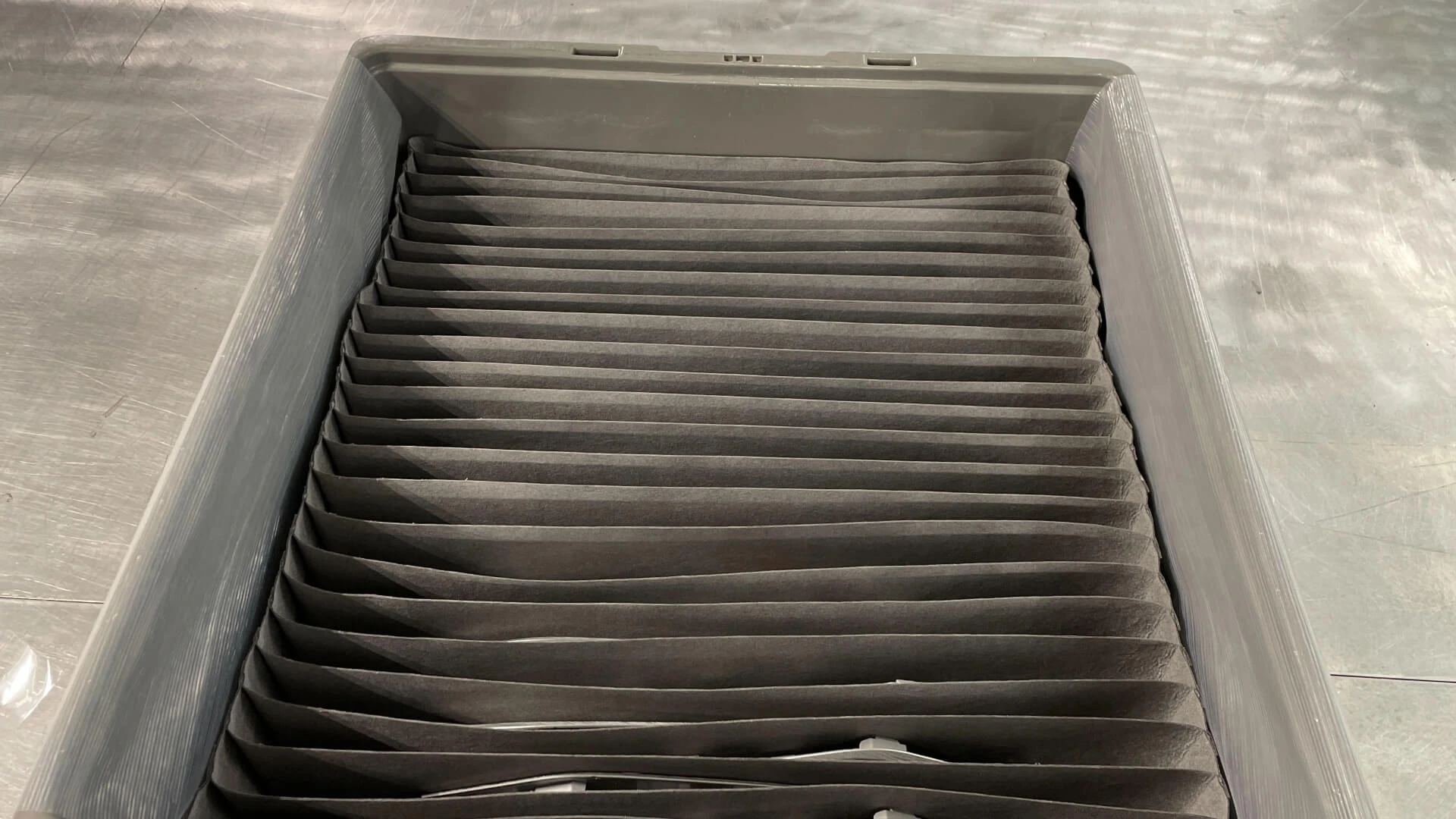

Returnable Tote With Dust Cover
Enlarge

LX Returnable Totes
Enlarge

Returnable Tote With Automotive Parts
Enlarge

LX Innerleaf
Enlarge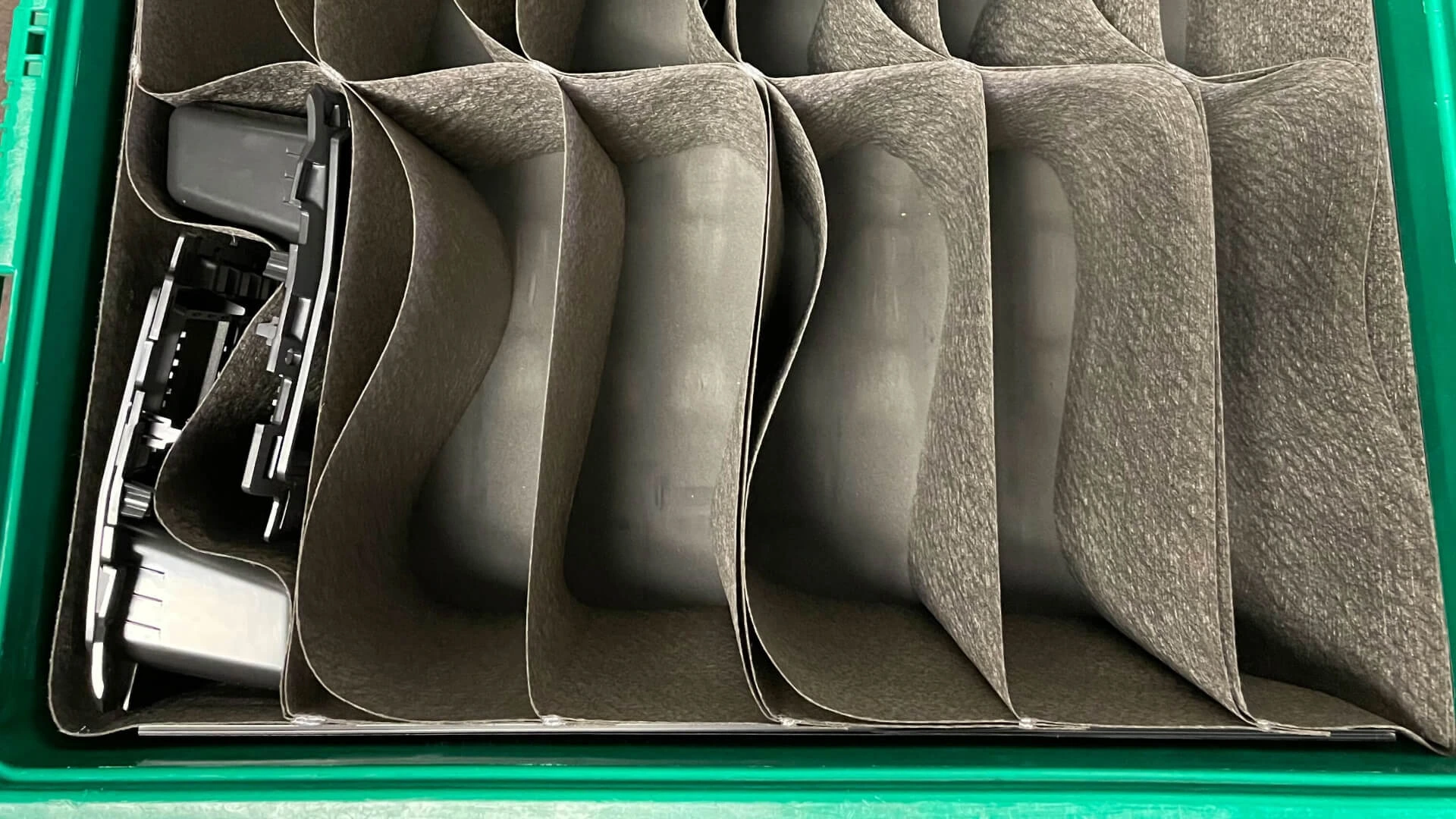
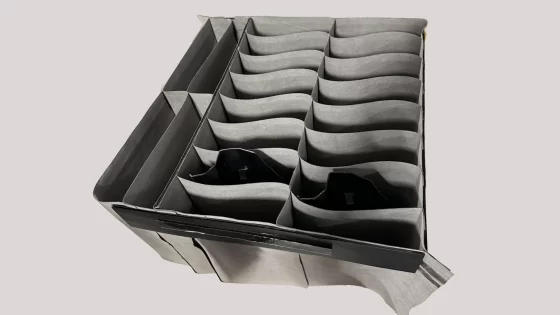
Custom LX Divider
Enlarge

LX Divider in a Pcorr Tote
Enlarge
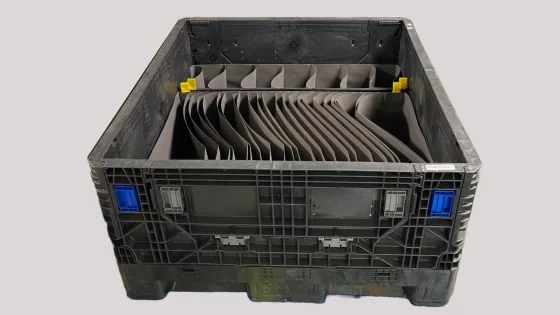
LX Collapsible Centersplit
Enlarge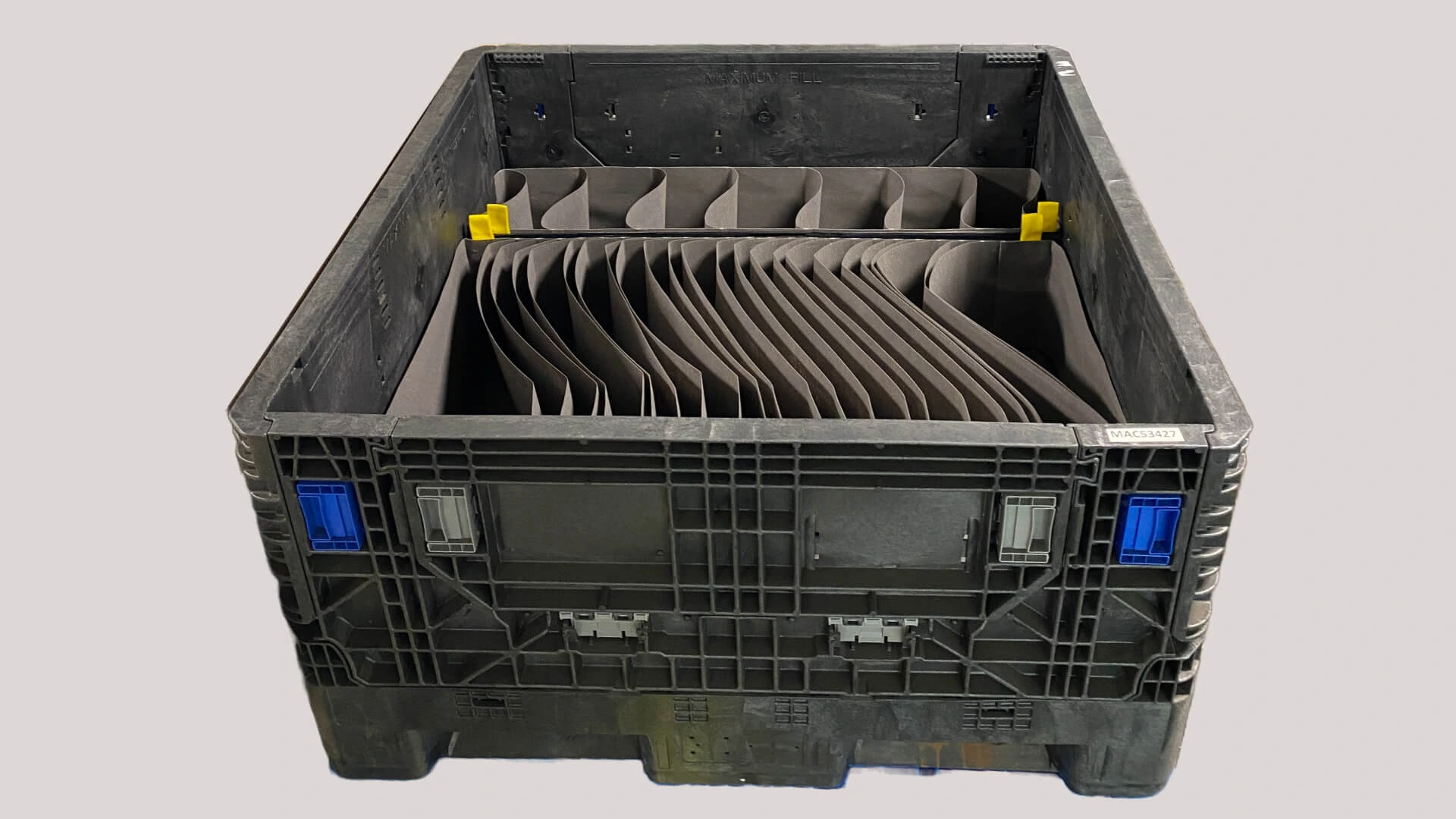

Evolon
Enlarge

Blue Plush Collapsible Centersplit
Enlarge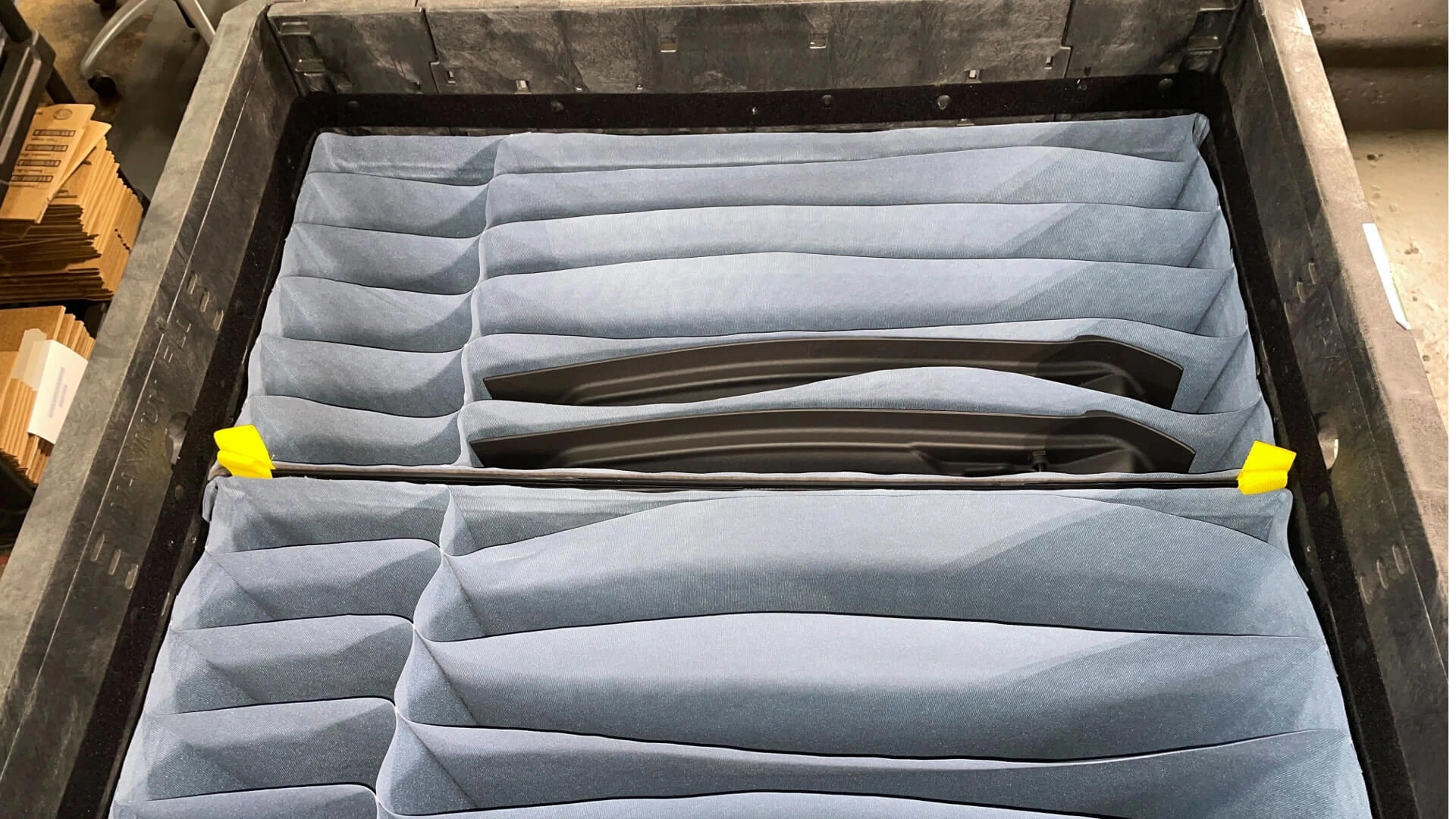
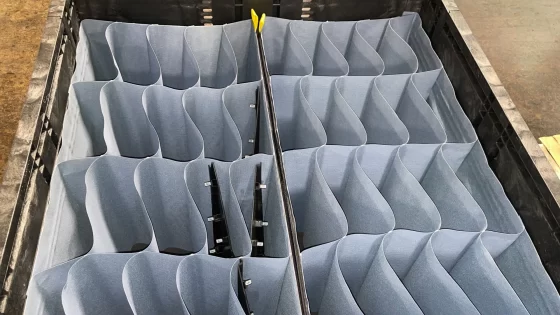
Blue Plush Centersplit With Automotive Parts
Enlarge
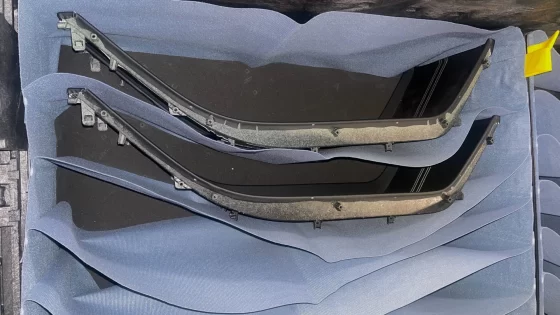
Blue Plush Centersplit
Enlarge
Applications in Automotive Production
Building on the versatility of returnable packaging types, let’s explore how these solutions are applied across various areas of automotive production. The durability and customization options of returnable packaging make it well-suited for protecting and transporting a wide range of automotive components.
Engine components:
- Reusable containers designed to protect and transport engine parts such as motors and transmissions
- Standardized plastic containers suitable for holding multiple smaller engines, compatible with automation for picking and placing
Body panels:
- Specialized racks for oddly shaped or fragile parts like body panels
- Custom packaging solutions to protect painted surfaces and prevent damage during handling and transport
Interior trim pieces:
- Stackable crates for various interior components
- Customized dunnage or dust bags to protect painted or finished surfaces of interior parts
Additional applications:
- Bulk containers for larger automotive components
- Plastic pallet and lid systems for efficient stacking and transport
- Protective packaging for sensitive electronic components, including electrostatic discharge (ESD) enabled reusables
- Customized solutions for new lightweight and electric vehicle parts
These applications demonstrate how returnable packaging has evolved to meet the specific needs of modern automotive manufacturing. As we’ll see in the next section, this tailored approach significantly benefits automotive manufacturers.
ITB’s innerleaf design allows for nesting parts, effectively doubling part density without increasing pack size.

Benefits for Automotive Manufacturers
While the applications of returnable packaging in automotive production are diverse, the benefits they offer to manufacturers are equally significant. Let’s explore how these reusable solutions contribute to operational efficiency, cost savings, and sustainability efforts.
Cost savings over time:
- Reduced long-term packaging expenses due to multiple use cycles
- Decreased waste management and disposal costs
- Lower risk of part damage, resulting in fewer replacements and reduced scrap
Alignment with just-in-time manufacturing:
- Standardized container sizes facilitate precise inventory management
- Consistent packaging dimensions support efficient automated handling systems
- Reliable supply of clean, ready-to-use containers for production lines
Improved part protection and quality control:
- Custom-designed packaging ensures optimal protection for specific parts
- Durable materials and designs reduce risk of damage during transport and handling
- Consistent packaging quality maintains part integrity throughout the supply chain
Additional benefits:
- Enhanced supply chain visibility through trackable containers
- Improved ergonomics for workers due to standardized handling processes
- Support for sustainability initiatives and reduced environmental impact
- Potential for RFID integration, enabling real-time tracking and inventory management
These benefits highlight why returnable packaging has become a cornerstone of modern automotive manufacturing. However, implementing and managing these systems also comes with challenges, which we’ll explore in the next section.
Did you know? ITB’s integrated packaging has been shown to reduce cost per part by up to 65%.
Challenges to Consider
While returnable packaging offers numerous benefits for automotive manufacturers, implementing and managing these systems also presents several challenges. Understanding these obstacles is crucial for companies looking to optimize their returnable packaging strategies.
Initial investment costs:
- Higher upfront expenses for purchasing durable, reusable containers
- Potential need for specialized handling equipment or storage systems
- Costs associated with implementing tracking systems for container management
Reverse logistics management:
- The complexity of coordinating return shipments of empty containers
- Potential for container loss or theft in the supply chain
- Balancing container inventory across multiple locations to ensure availability
- Additional transportation costs for returning empty containers
Cleaning and maintenance requirements:
- Regular cleaning and sanitization to meet quality standards
- Periodic inspection and repair of damaged containers
- Storage space needed for container maintenance and cleaning operations
- Potential for cross-contamination if cleaning processes are inadequate
Additional challenges:
- Managing seasonal demand fluctuations and peak production periods
- Adapting to changes in part designs or production processes that may require new container types
- Coordinating with multiple suppliers and partners to standardize returnable packaging systems
- Training staff on proper handling and management of returnable containers
By addressing these challenges proactively, automotive manufacturers can maximize the benefits of returnable packaging while minimizing potential disruptions to their supply chain operations.
Did you know? ITB’s solutions minimize initial investments by eliminating the need for separate tooling and die-cut processes, simplifying reverse logistics with collapsible designs that save space during returns.
Implementing Returnable Packaging Systems
While the challenges of returnable packaging are significant, they can be effectively managed through strategic implementation. Let’s explore key considerations for automotive manufacturers looking to optimize their returnable packaging systems.
Assessing supply chain needs:
- Analyze production volumes, shipping distances, and part characteristics
- Evaluate current packaging processes and identify areas for improvement
- Consider long-term sustainability goals and cost-reduction targets
Choosing appropriate container types:
- Select containers that balance protection, efficiency, and cost-effectiveness
- Consider standardized options like Euro containers or KLT containers for compatibility
- Explore custom solutions for unique or high-value components
Integration with lean manufacturing practices:
- Align returnable packaging systems with Just-In-Time (JIT) and Kanban principles
- Implement tracking systems to enhance visibility and inventory management
- Optimize container sizes and quantities to reduce waste and improve flow
Customization options:
- Utilize dividers, inserts, and dunnage to maximize protection and space utilization
- Explore modular designs that can adapt to changing part specifications
- Consider ergonomic features to improve handling and worker safety
By carefully considering these factors, automotive manufacturers can develop returnable packaging systems that enhance efficiency, reduce costs, and support sustainability initiatives. In the next section, we’ll examine the environmental impact and sustainability aspects of returnable packaging in more detail.
Get a Returnable Packaging System Readiness Checklist to assess your organization’s readiness.
Environmental Impact and Sustainability
As the automotive industry continues to evolve, the environmental impact of packaging choices has become increasingly important. Returnable packaging offers significant advantages in this area, aligning with the industry’s growing focus on sustainability.
Reduced waste generation:
- Returnable packaging dramatically decreases the amount of single-use materials entering the waste stream
- This reduction supports automotive manufacturers in meeting increasingly stringent sustainability goals set by OEMs and regulatory bodies
Lower carbon footprint over time:
- While initial production of durable returnable packaging may have a higher carbon footprint, the long-term environmental impact is significantly lower
- The automotive industry is targeting net-zero CO2 emissions between 2030-2040, making efficient packaging crucial to these efforts
Alignment with automotive industry sustainability goals:
- Many automotive companies are adopting circular economy practices, which returnable packaging supports
- The EU’s regulatory framework is advancing circularity requirements, with binding quotas on recycling and secondary input uses for vehicle production
Additional sustainability benefits:
- Returnable packaging often uses recyclable materials, supporting end-of-life recycling efforts
- Some innovative designs allow for the reuse of traditionally “single-use” packaging multiple times, further reducing waste
By implementing returnable packaging solutions, automotive manufacturers can make significant strides towards their sustainability objectives. This helps meet regulatory requirements and positions companies as leaders in environmental stewardship within the industry.
Summary and Key Takeaways
Returnable transport packaging continues to play a crucial role in optimizing automotive supply chains. Its durability, reusability, and customization options offer significant advantages in protecting parts, reducing costs, and supporting sustainability initiatives. While challenges such as initial investment and reverse logistics management exist, the long-term benefits often outweigh these concerns for many automotive manufacturers.
Key Takeaways:
- Returnable packaging supports efficient handling and automation in automotive production
- It offers long-term cost savings and aligns with just-in-time manufacturing principles
- Environmental benefits include reduced waste generation and lower carbon footprint over time
- Successful implementation requires careful assessment of supply chain needs and integration with existing processes
With the ongoing evolution of the automotive industry, particularly with the rise of electric vehicle production, returnable packaging solutions will likely adapt to meet new challenges and opportunities. By carefully evaluating their specific needs and goals, automotive manufacturers can leverage returnable packaging to enhance their operational efficiency, reduce costs, and meet sustainability objectives.
More from our Automotive Supply Chain Optimization Series:
Coming Soon:
- Expendable Dunnage for Automotive Packaging
- Returnable Dunnage for Automotive Packaging
- Cost-effective Packaging Ideas for Automotive Parts
- Sustainable Automotive Products Packaging
- Eco friendly Void Fill Packaging for Automotive Industry
- Automotive Parts Packaging Categories and Technical Considerations